
Prepared environment
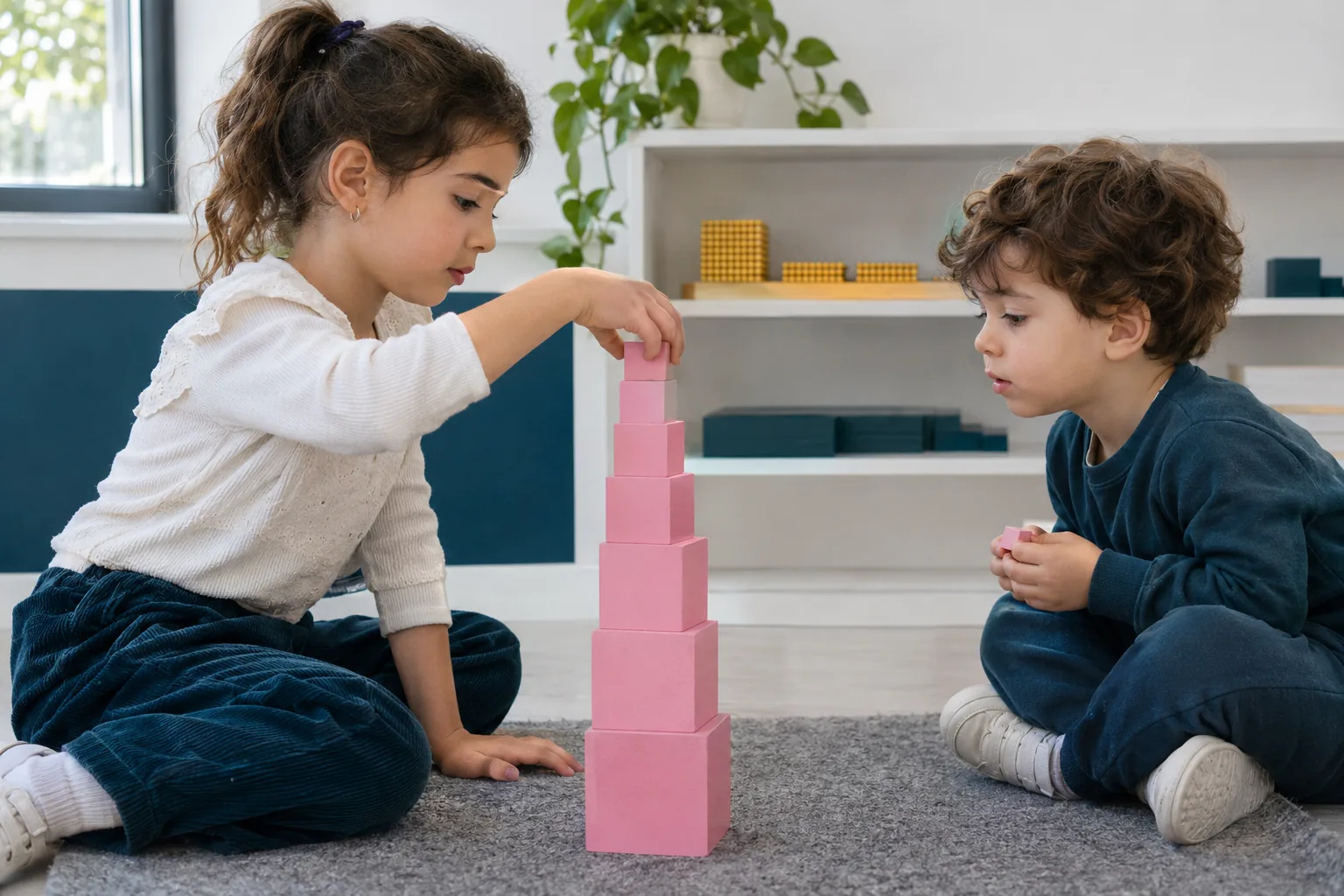
Everything is at the child's height and in its place. There is only one of each material, so children learn to wait and take turns.
Montessori is less a method than a way of looking at children. We see it on our shelves, in the order of the classroom and in the moments when we know to stay quiet.

Since the first Casa dei Bambini opened in Rome in 1907, one thing has not changed: in a well-prepared environment, a child shows what they are ready to learn.
Maria Montessori was a physician. She observed children for a long time and saw that they learn through repetition, with their hands, concentrating for long periods on work they chose themselves. The classroom was built around that observation: low shelves, real child-sized tools, materials that each teach one thing.
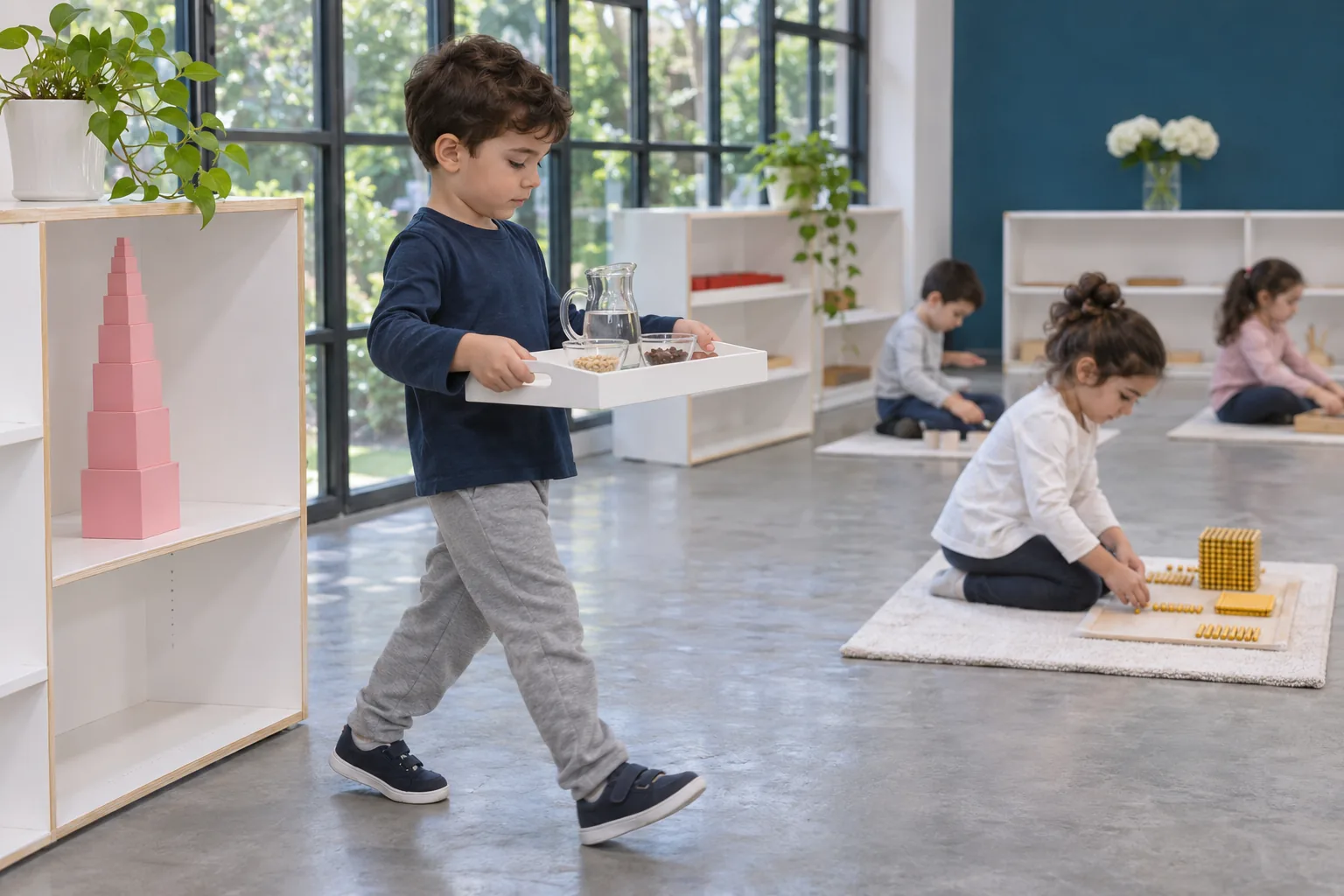
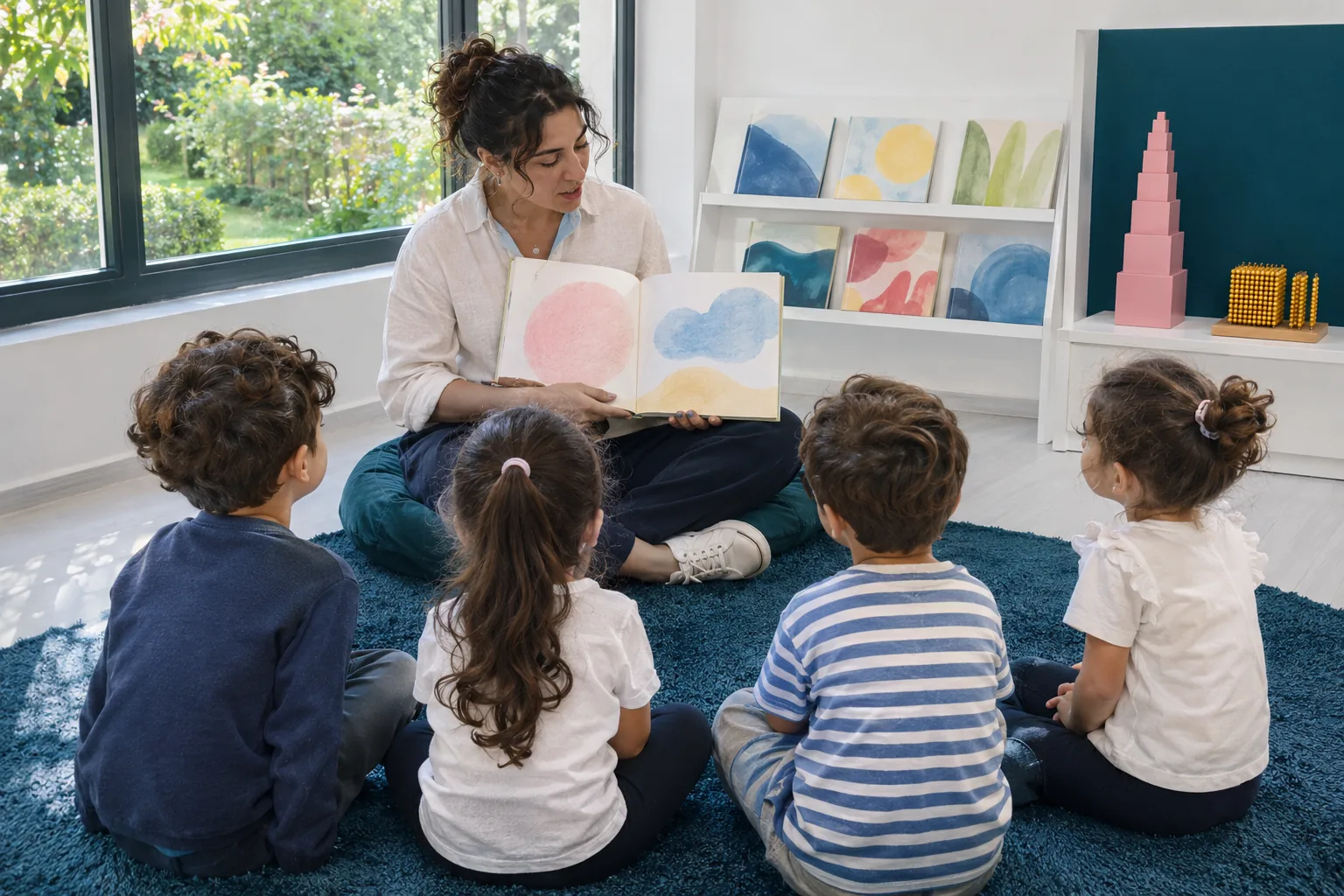
At Çınaraltı the day starts with an uninterrupted three-hour work period. A child chooses a work from the shelf, rolls out a mat, works, and puts the work back. Meanwhile the guide moves around the room, takes notes and, when needed, presents a new material to one child. There are no rewards, punishments or star charts; finishing the work is reward enough.
Prepared environment
Everything is at the child's height and in its place. There is only one of each material, so children learn to wait and take turns.
Mixed-age group
Three- to six-year-olds share one classroom. Younger children learn by watching, older ones consolidate what they know by showing.
An observing guide
The guide is not at the front of the room but within it: watching, waiting for the moment a child is ready, presenting materials one by one.
From 18 months
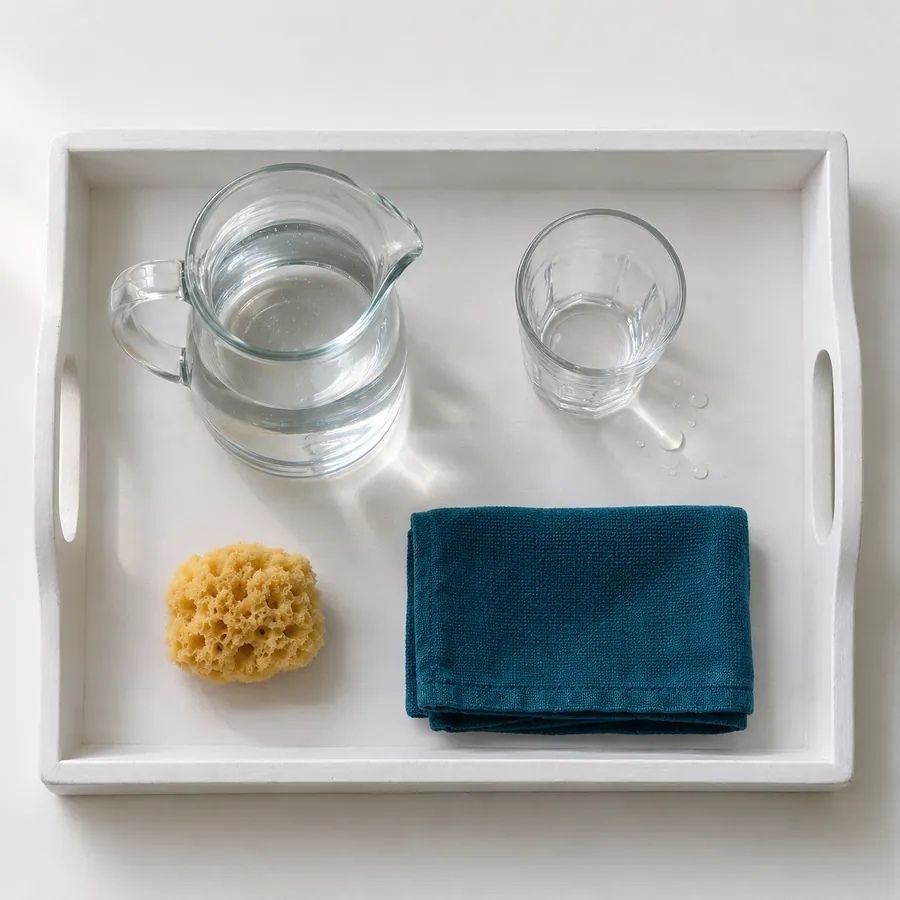

The practical life area is where a new child stops first. The work here is familiar from home: pouring, wiping, carrying, folding. But each activity is broken into small, carefully ordered steps, and by repeating them the child learns to control their movements.
The trays hold real tools: a glass jug, a ceramic plate, a steel child's knife. If a glass breaks we clear it up together; children learn to take care of things through experience rather than a rule. This work also prepares for the other areas: the wrist that holds the jug is the wrist that will later hold a pencil.
Some of the work done in this area
From 2.5 years
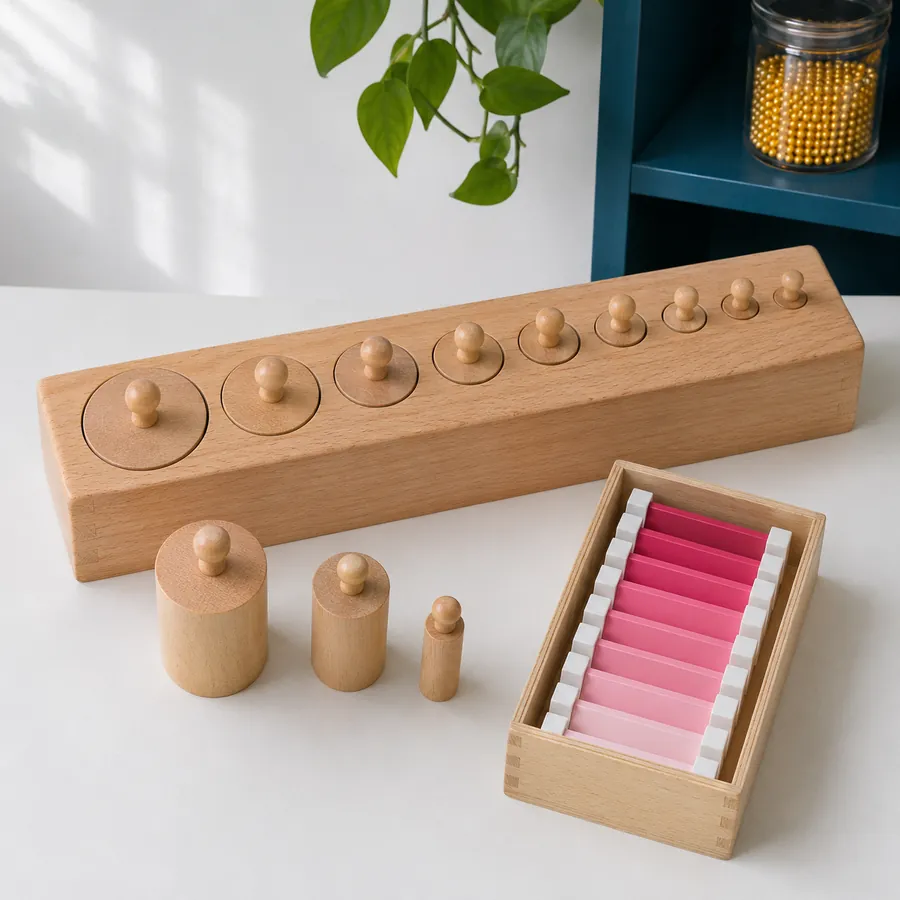
Sensorial materials help children organise the world they already perceive. The cubes of the pink tower differ only in size; their colour and material are the same. The child focuses on one quality and discovers "big, bigger, biggest" with their hands.
What these materials share is that the control of error is inside them. A cylinder does not fit the wrong hole; a tower built in the wrong order leans. The child does not hear about the mistake from an adult; they see it and correct it themselves. Many of the mathematics materials build on this experience.
Some of the work done in this area
From 18 months (words), from 3 years (letters)
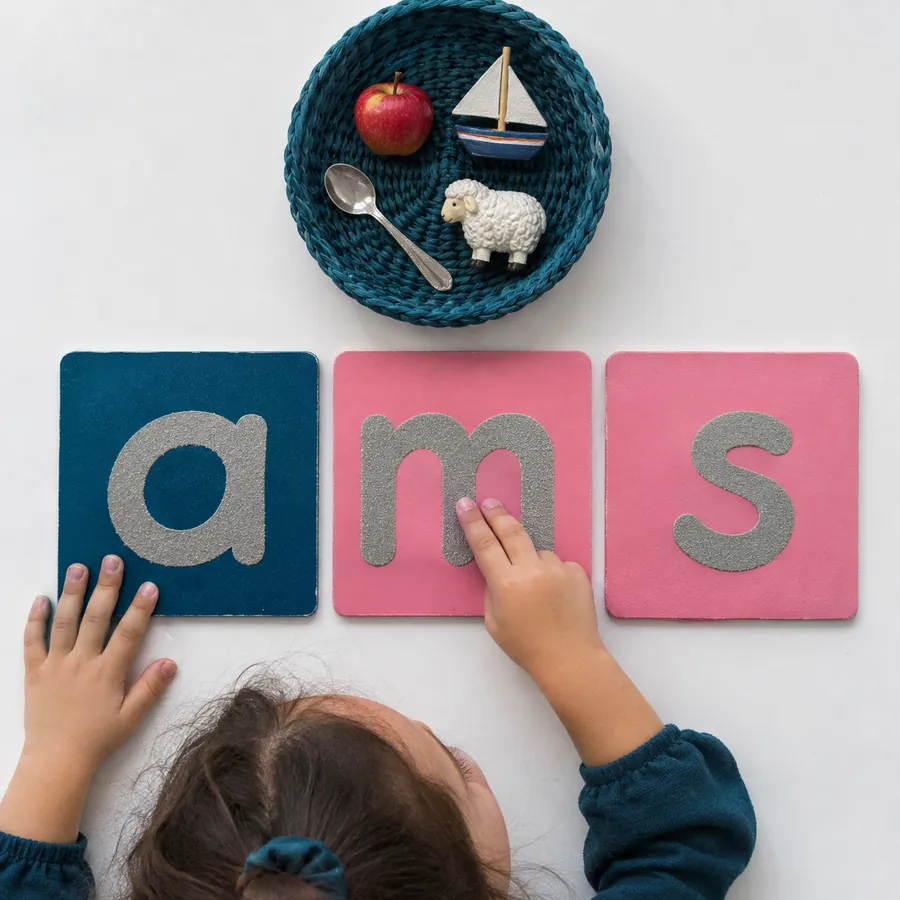
The language area is the corner parents are most curious about, because they usually ask "when will my child learn to read?". Our answer: without rushing, but without postponing either. First the child learns to hear the sounds in words, then recognises their letters with a finger on the sandpaper boards.
On the sandpaper letters vowels sit on blue boards and consonants on pink ones. You will see this on our website too: the letter next to each page title is coloured blue or pink according to the first sound of the title. With the moveable alphabet children build words first, that is they write; reading usually follows on its own.
Some of the work done in this area
From 4 years
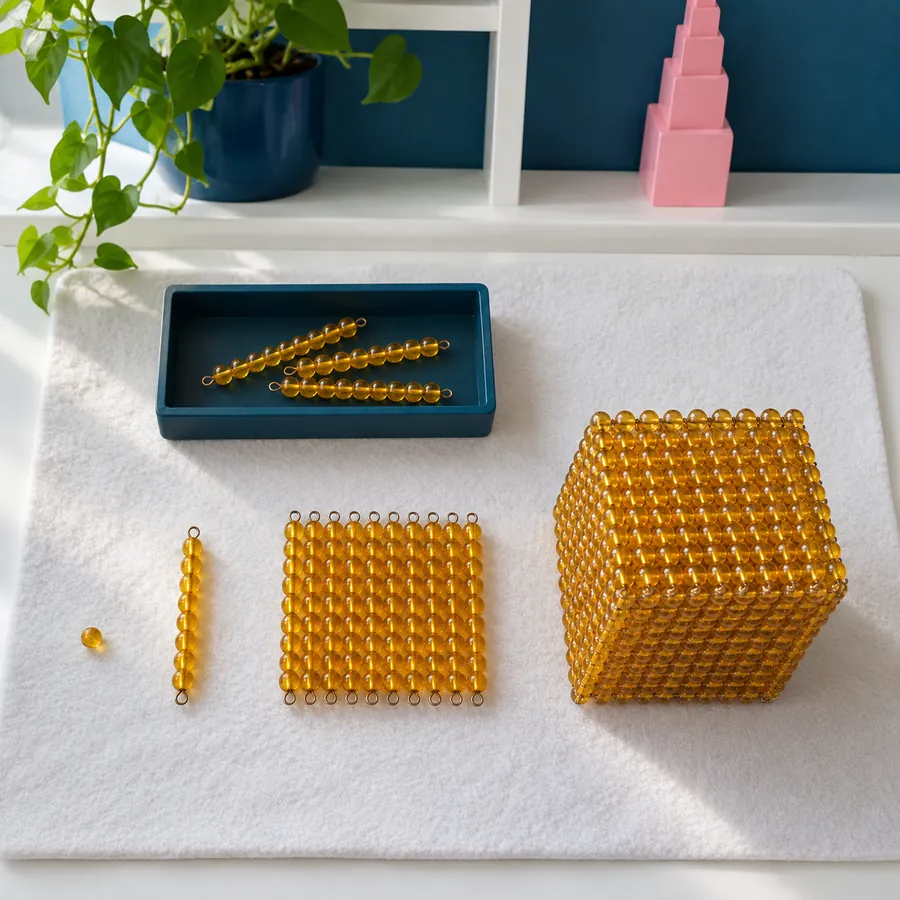
The golden beads are the heart of Montessori mathematics. A single bead is a unit; ten beads on a wire make a ten-bar, ten bars side by side make a hundred-square, ten squares stacked make a thousand-cube. A child feels the weight of a thousand beads before hearing the word "thousand".
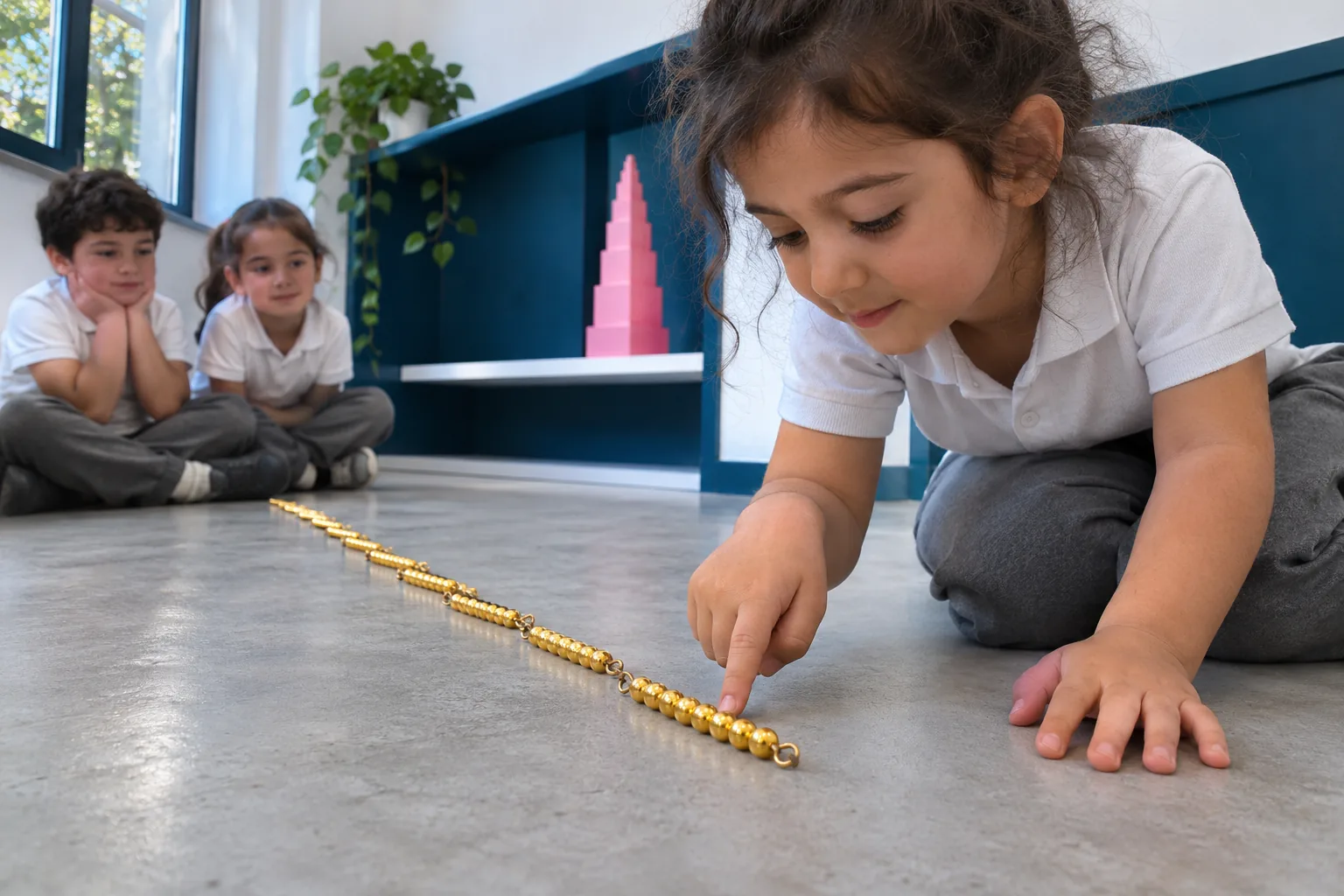
The bead chains are some of the longest works in the room: the hundred chain is laid on the floor, the child counts each bead and puts a small label on every ten. When this hour-long work is finished, half the class has often gathered at the start of the chain. That is why the clock and class-size drawings on our website are made of beads.
Some of the work done in this area
From 3 years
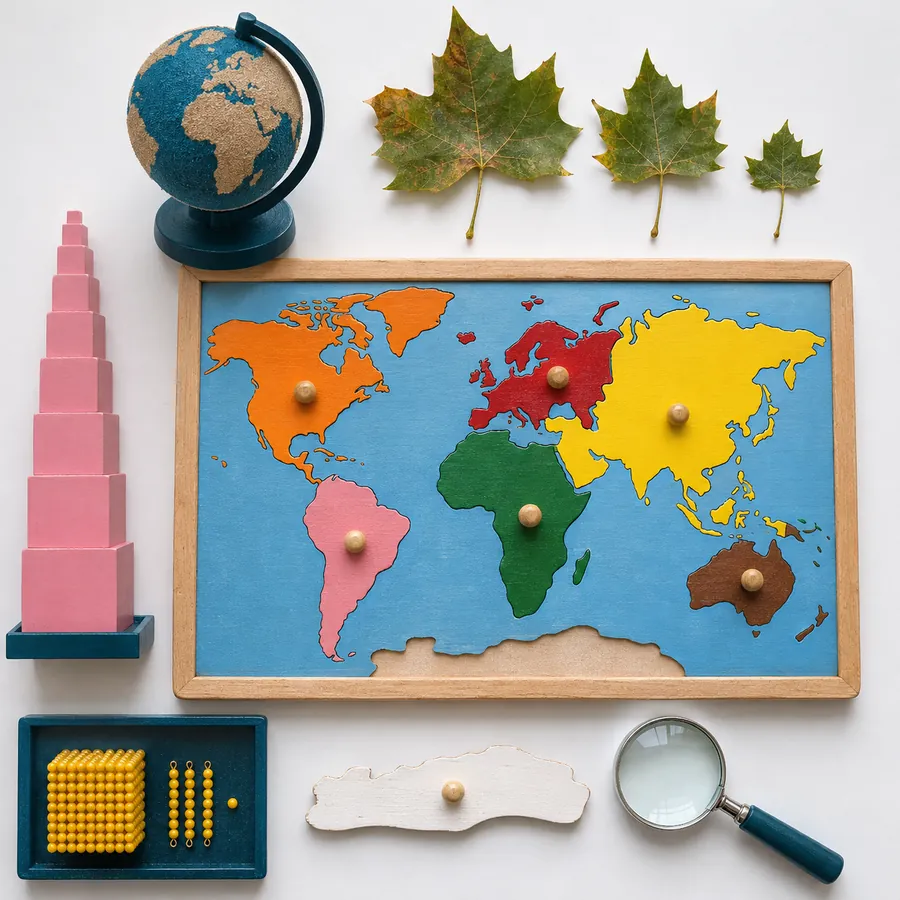
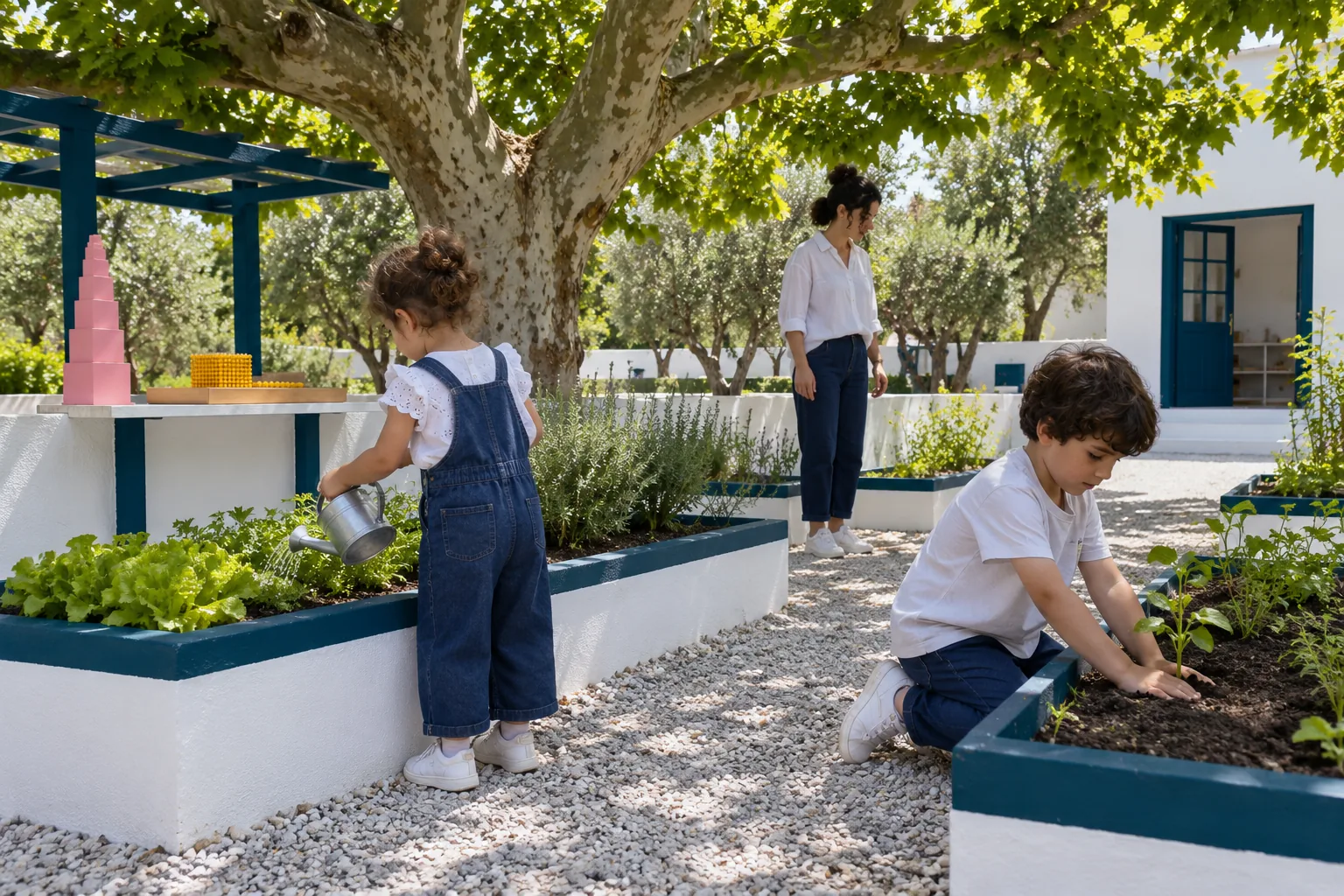
The culture area brings together geography, botany, zoology and history; but for a small child they are all part of the same curiosity: "Where is this? What is it? How does it grow?" The continent pieces of the puzzle map keep the Montessori tradition of being painted in the same colours in every school.
At Çınaraltı half of this area is in the classroom and half in the garden. The plane tree leaf is compared with the leaf shapes in the botany cabinet, tomatoes from the vegetable bed are carried to the kitchen, and olives are picked in November. The seasons table is rebuilt every month with what the children bring in from the garden.
Some of the work done in this area
In Türkiye no licence is needed to use the name "Montessori". Whichever school you visit, we suggest you look for these:
If you want to see this with your own eyes, visits are on Tuesdays and Thursdays.
Cookies
This site only uses cookies that are necessary for it to work.Cookie Policy