Settling in: what really happens in the first two weeks?
Crying, disrupted sleep, suddenly acting "younger" at home — most of what you see in the settling-in weeks is normal. What to expect, and what can you change as a parent?
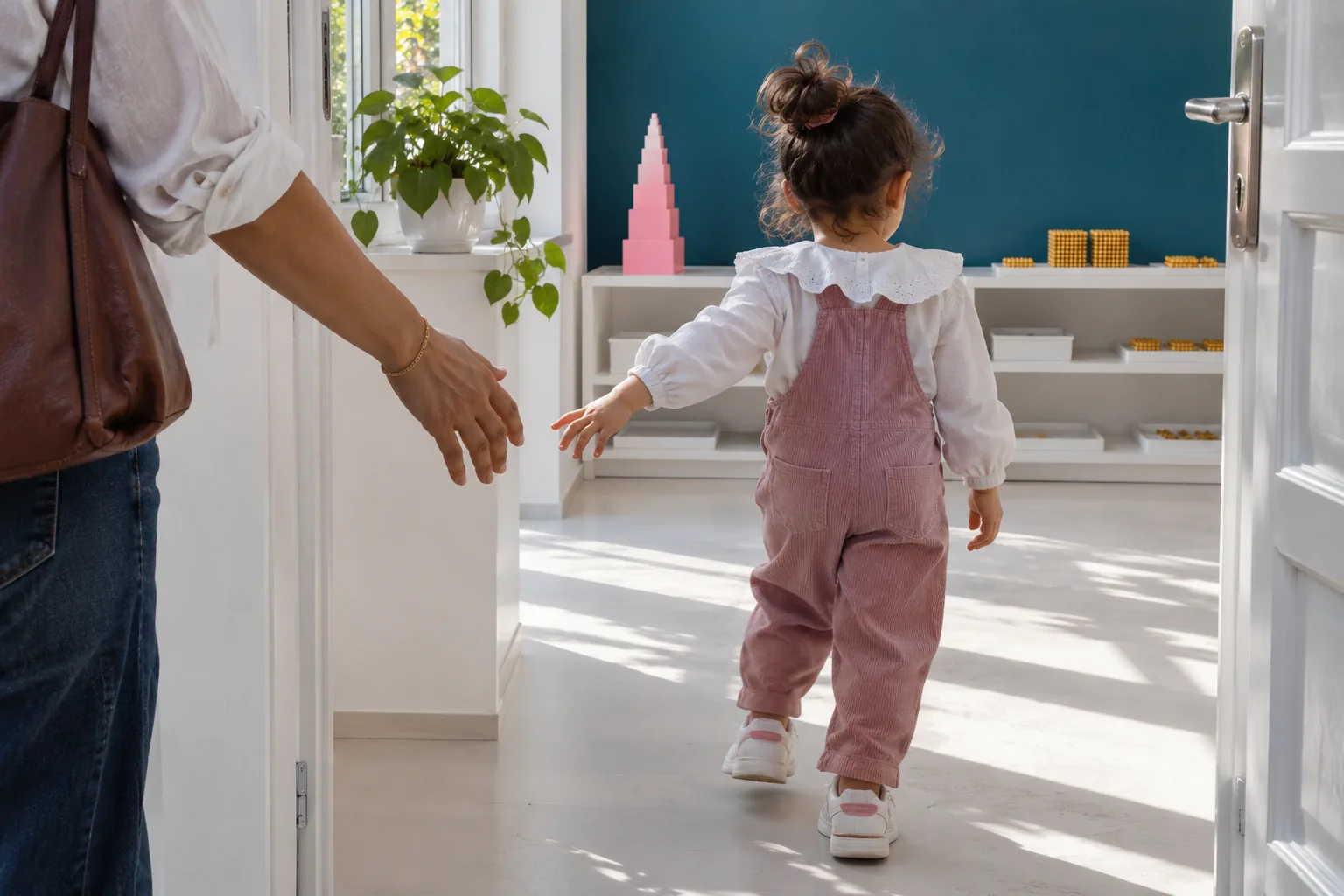
Every September and February we see the same scene: a hand held tight at the garden gate, and a mother or father getting ready to leave their child while feeling anything but ready. Settling in is hard for children and parents alike; being hard does not mean something is going wrong. In this post we share what we have seen at Çınaraltı over seven years, what usually happens in the first two weeks and what you can change as a parent.
Not the first day, the third
Most parents dread the first day. Yet for many children the first day is a curious day of discovery: new shelves, a new garden, new faces. The real difficulty usually comes on the third or fourth day, when the child understands that this is not a visit but a new routine. So we suggest you do not speed things up thinking "she didn't cry at all on day one, she has settled". We start with one hour and extend it a little each day according to the child's response.
Keep the goodbye short and clear
The single most helpful thing during settling in is a short, consistent goodbye. Hug your child at the door, tell them when you will be back in terms they understand ("after lunch", "after the garden") and leave. Long goodbyes, coming back through the door and "one more minute" negotiations increase anxiety, because the child senses that the adult is not sure either.
One of the most common mistakes is slipping away quietly while the child is absorbed in play. It feels easy at the time, but when the child looks up and cannot find you, their trust is shaken and the next morning they do not want to let you out of sight. A goodbye that was said, however hard, is always better than a secret exit.
A transitional object
For children in the Nest, a small blanket or soft object from home makes sleep time much easier. Think of it not as a toy but as a bridge: in the first weeks the child carries the smell of home with them. In the Children's House this is rarely needed; having their own hook, their own shoe rack and their own glass does the same job.
What you may see at home
During the settling-in weeks many children are calm at school and grumpier than ever at home. This is not a contradiction: the child works hard all day to adapt to a new routine and puts the load down where they feel safest, at home. In the first two weeks it is normal to see:
- Getting tired early in the evening, falling asleep more easily or, on the contrary, with great difficulty
- Asking you to do things they already did themselves ("you put my shoes on")
- Short setbacks in toilet learning
- Saying nothing about school, or telling everything at once
These usually pass on their own within two to four weeks. During this period we suggest keeping evenings simple and postponing guests and new activities for a few weeks.
Instead of "What did you do today?"
The answer to "What did you do today?" is often "nothing". That does not mean the child did nothing; the question is simply too broad. Try more concrete questions: "Who did you play with in the garden?", "Was there soup at lunch?", "Which tray did you choose today?". Sometimes it is better not to ask at all; the telling often comes at bedtime, once the lights are off.
Talk to the guide, but not at the door
During settling in our guide gives you a short note at the door every day. We prefer longer conversations by phone or at the end of the day rather than in front of the child, because children always hear when they are being talked about. At the end of the second week we review settling in together in a short meeting.
There is no way to speed up settling in, but there are many ways to slow it down. Consistency, a short goodbye and patience are the fastest route.
FAQ
My child has cried every morning for two weeks. What should I do?
Check whether the crying stops a few minutes after you leave; our guide tells you every day. Crying that starts at the door and ends quickly is a normal part of settling in. If it lasts all day and affects eating and sleeping, we slow the calendar down together.
Can I stay at school during settling in?
In the first days, yes; you can wait in the garden or at the entrance. We do not recommend waiting inside the classroom, because the child is torn between you and the guide and settling in takes longer.
Is it better to start with half days?
For most children the first weeks are shorter than half a day anyway. Once settled, the choice between half and full days depends on the family's routine and the child's sleep.