Young children and screens: how many minutes, at what age?
The World Health Organization does not recommend screens under two and says no more than an hour a day for ages 2–4. What are these recommendations based on, and how can they work at home?
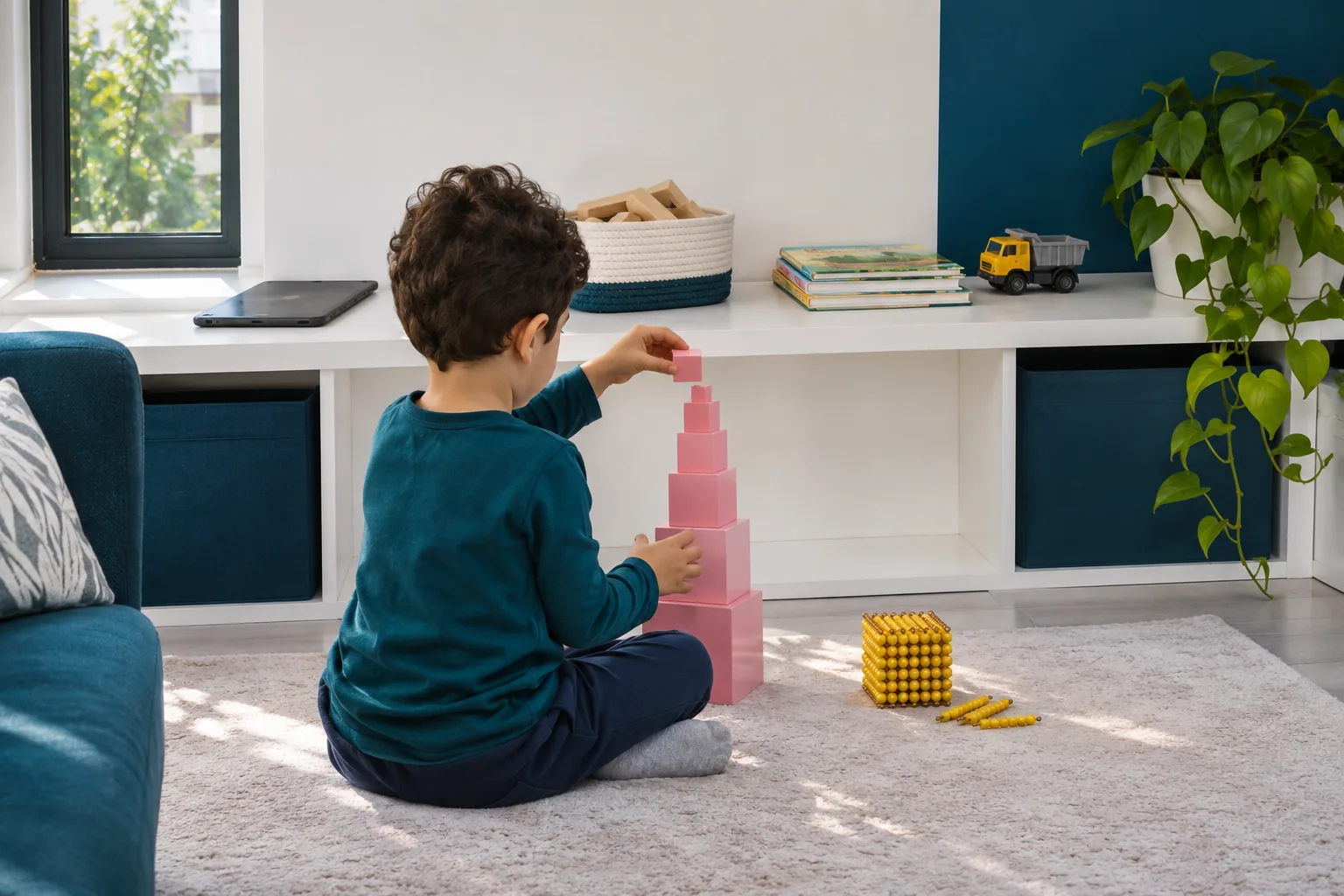
There are no screens at our school: no tablets, television or "educational videos" in the classroom. We see this less as a ban than as a natural result of the room: a child who works with their hands all day, walks in the garden and talks with others does not need a screen. But once the school day ends, screens are on every family's agenda. In this post we bring together international recommendations and the practical ideas shared at our parent meetings.
What do the recommendations say?
The World Health Organization's 2019 guidelines for children under five address screen time under "sedentary behaviour" and recommend:
- Under 1 year: screen time is not recommended.
- 1 year: sedentary screen time is not recommended.
- 2 years: no more than 1 hour a day; less is better.
- 3–4 years: no more than 1 hour a day; less is better.
The American Academy of Pediatrics points the same way: no screens under 18 months other than video-chatting with family, only high-quality content watched with an adult between 18 and 24 months, and for ages 2–5 no more than an hour a day of content, ideally watched together.
Why so little?
The main idea behind the recommendations is less about the screen itself than about what it replaces. At this age children learn language through face-to-face conversation, movement by moving and attention by doing something with their hands. Every hour in front of a screen is an hour taken from these experiences. Sleep is affected too: children who look at screens before bed can take longer to fall asleep.
Then there is attention. In a Montessori classroom we see a three-year-old work with the same cylinder block for twenty minutes. That long, quiet focus is hard for a mind used to colourful images that change within seconds. Attention is like a muscle: the more it is used, the stronger it gets.
A realistic plan at home
Removing screens completely is not realistic for most families, and the recommendations do not ask for that. A few ideas parents at our meetings say work:
- Screens have a place: none in the bedroom or at the dinner table. When not in use, the tablet sits face down on a shelf out of sight.
- Plan first, then screen: a plan with a clear start and end, such as "we'll watch one episode, then go to the park", cuts down "just a bit more" negotiations.
- Watch together: talking about what they see makes watching less passive.
- Video calls are different: video calls with grandparents involve real conversation, so the recommendations treat them separately.
- Know what replaces it: the secret of a screen-free evening is having things within reach that the child can do alone: blocks, books, paints, a small kitchen job.
If you are on a screen too
Children learn from what they see more than from rules. Leaving your phone in another room at dinner is more effective than anything you could say. We know that is not always possible; but small, consistent steps last longer than big resolutions.
The value of a screen-free hour depends on what the child does in it. If real work is within reach, they will not look for the screen.
FAQ
Do educational apps count?
Yes. The recommendations limit sedentary time in front of a screen regardless of the type of content. An app labelled "educational" is still part of that time.
Is a film at the weekend a problem?
An occasional film, watched together and talked about afterwards, is a reasonable balance for most families. What matters is that it does not become a daily habit.
Are screens never used at school?
Not in the classrooms. We use screens for adults at parent meetings and in event notices, not for children.